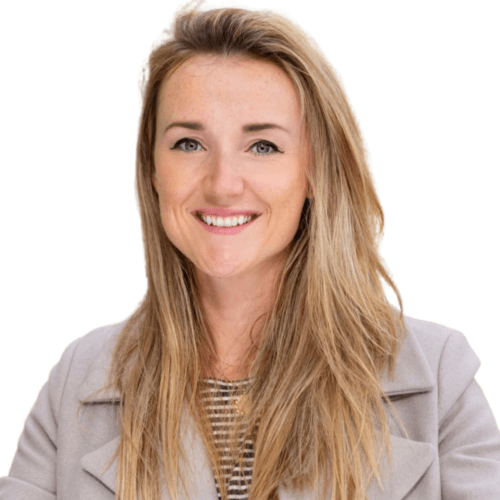


Charlotte Vogt
CV
Research
Our research aims to uncover how catalytic reactions proceed under realistic operating conditions. Catalysis underpins a large fraction of the global economy, yet many catalytic processes remain poorly understood at a fundamental level due to the complexity of dynamic, multi-scale phenomena occurring at interfaces.
To address this, we develop and apply advanced operando and time-resolved spectroscopic methodologies, combining tailored experimental designs with data-driven analysis. These approaches enable us to access transient, non-equilibrium states of catalytic systems that are typically inaccessible with conventional methods. More broadly, we aim to establish a framework for interpreting catalytic systems where observability, kinetics, and spatial heterogeneity are intrinsically coupled.
A central focus of the group is the conversion of carbon dioxide into fuels and chemicals, alongside broader challenges in energy and materials sustainability. By establishing a mechanistic understanding of catalytic function under working conditions, we aim to enable the rational design of improved processes and the discovery of new catalytic concepts.
Biography
Born in 1991 in Utrecht, the Netherlands, Charlotte Vogt spent her early education in Houston, Texas, before graduating from ORS Lek en Linge in Culemborg, the Netherlands. In 2009, she began an undergraduate degree in Chemistry with a minor in Management and Policy at Utrecht University. She completed both her Bachelor’s and Master’s theses under the mentorship of Prof. Dr. Ir. Bert Weckhuysen. She graduated in 2015 with a Master’s in Science (Inorganic Chemistry and Catalysis) and Business Management, earning “Highest Distinctions”. During her studies, Charlotte was actively involved in volunteering (amongst others, with schoolchildren in Ulaanbaatar, Mongolia) committees, and leadership roles. In 2015 she spent 7 months in Baton Rouge, Louisiana (USA), working as an intern in Investor Relations at Albemarle.
 Charlotte commenced her PhD in 2015, also under the supervision of Prof. Dr. Ir. Bert Weckhuysen, as part of a TA-CHIPP initiative between BASF NL, NWO, Eindhoven University of Technology, and Utrecht University. In 2018, she received a VATAT fellowship for “outstanding international students” to conduct part of her research at the Weizmann Institute of Science in Israel, with Dr. Baran Eren and Prof. Dr. Ronny Neumann. For her early career achievements, she was named the Outstanding Female Scientist of 2019 by the Israel Vacuum Society and Intel Israel. In 2020, she was awarded the Niels Stensen Fellowship for “academic excellence and social commitment,” enabling her to pursue independent postdoctoral research at the Hebrew University of Jerusalem and the Weizmann Institute. She completed her doctorate in April 2020, also with “Highest Distinctions”.
In 2021, Charlotte established the Vogt Laboratory of Catalysis for Fuels of the Future at the Technion – Israel Institute of Technology. Her research focuses on the fundamental understanding of catalytic processes critical for sustainable energy solutions, including carbon dioxide valorization, nitrogen fixation, hydrogen production, and waste recycling. That same year, she was featured in Forbes’ “30 under 30”.
Her accolades include the Clara Immerwahr Award (2022), the Beilby Medal and Prize (2023), a spot on Chemical & Engineering News’ “Talented 12” list (2023), and the inaugural EuroTech Future Award (2023). She was honored with the Martinus van Marum Prize (2024) by the Royal Holland Society of Sciences, and most recently with the Umbrella award 2025, and the 2025 Uzi and Michal Halevy Award for Innovative Applied Engineering.
Group Members
| Title | Name | ||
| denisl@technion.ac.il | Senior Research Fellow and Lab Manager | Denis Leybo | |
| zdenis@technion.ac.il | Senior Scientist | Denis Zavelev | |
| b.gal@technion.ac.il | Research Support | Gal Ben-Bassat | |
| dsinausia@campus.technion.ac.il | Postdoc | Daniel Sinausia | |
| artiomnes96@campus.technion.ac.il | PhD | Artiom Nesterenko | |
| deeprajverma@campus.technion.ac.il | PhD | Deepraj Verma | |
| rutvijadange@campus.technion.ac.il | PhD | Rutvija Dange | |
| tal.rosner@campus.technion.ac.il | PhD | Tal Rosner | |
| zoe-talya.ya@campus.technion.ac.il | PhD | Zoe Yagil | |
| zhiyue-wang@campus.technion.ac.il | PhD | Zhiyue Wang | |
| k.ariel@campus.technion.ac.il | MSc | Ariel Kelrikh | |
| zhaohuaichen@campus.technion.ac.il | MSc | Zhaohuai Chen | |
| yara.hijaze@campus.technion.ac.il | MSc | Yara Hijaze | |
| gyuval@campus.technion.ac.il | MSc | Yuval Grosskopf |
Selected publications
Dynamic Response Spectroscopy: an Emergentist Framework for Multi-Timescale Catalytic Interfacial Dynamics
Daniel Sinausia, Florian Meirer, Anatoly I. Frenkel, and Charlotte Vogt
ACS Catalysis 2025, 15, 19397–19409.
Decoding Double Layer Dynamics for Carbon Dioxide Electroreduction over Cu
Daniel Sinausia, Noam Zisser, Thierry Kilian Slot, David Eisenberg, Florian Meirer, and Charlotte Vogt
Angewandte Chemie International Edition 2025, 64, e20243177.
Metal–Support Interactions in Metal Oxide–Supported Atomic, Cluster, and Nanoparticle Catalysis
Denis Leybo, Ubong J. Etim, Matteo Monai, Simon R. Bare, Ziyi Zhong, and Charlotte Vogt
Chemical Society Reviews 2024, 53, 10450–10490.
The Concept of Active Sites in Heterogeneous Catalysis
Charlotte Vogt and Bert M. Weckhuysen
Nature Reviews Chemistry 2022, 6, 89–111.
Dynamic Restructuring of Supported Metal Nanoparticles and its Implications for Structure-Insensitive Catalysis
Charlotte Vogt, Florian Meirer, Matteo Monai, Esther Groeneveld, Davide Ferri, Rutger A. van Santen, Maarten Nachtegaal, Raymond R. Unocic, Anatoly I. Frenkel, and Bert M. Weckhuysen
Nature Communications 2021, 12, 7096.