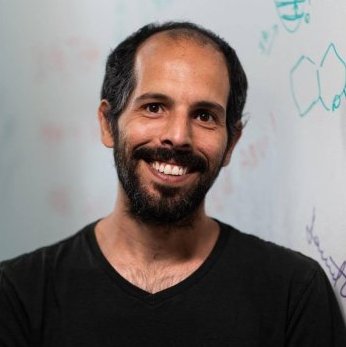

Associate Prof. Renana Gershoni-Poranne
The Poranne Research Group uses computational chemistry to explore fundamental questions about aromaticity and electronic structure. We’re interested in how features like molecular topology, substituents, heteroatoms, and metal coordination shape aromatic and antiaromatic behavior in a wide range of polycyclic systems. Our projects span classic aromatic hydrocarbons, non-benzenoid frameworks, excited-state aromaticity, organometallic systems, and structure–property relationships in functional chromophores.
Students in the group get hands-on experience studying how small changes in molecular structure influence stability, electron delocalization, magnetic response, and optical properties. Typical projects involve comparing singlet and triplet states, analyzing molecular orbitals and spin densities, and applying aromaticity indicators such as NICS, multicenter indices, current-density maps, and integrated bond currents.
We work with modern computational tools including Gaussian, ORCA, Multiwfn, Aroma, SYSMOIC, ChemCraft, and GaussView. In addition to these quantum-chemical approaches, the group also uses data-science and machine-learning methods to analyze trends, build predictive models, and develop new ways to understand structure–property relationships.
Overall, we offer a collaborative environment where students can learn practical computational skills while investigating deep, fundamental principles that govern aromaticity and electronic behavior. It’s an excellent opportunity to see how theory, computation, and data-driven methods come together to answer interesting chemical questions.
Required background: Previous experience in computational chemistry and/or coding is not required, but can be an advantage. The group believes in an inclusive and collaborative culture, where team-work and mutual respect are top priorities. We are always open to receiving new members who are excited about learning and who are motivated to work towards advancing our understanding of chemistry and molecular design.
Visit our website for more info: poranne-group.github.io
Project #1 Determining Aromaticity in Butalene, Pentalene and Naphthalene
Aromaticity in fused-ring systems depends on how many π-electrons the molecule has and whether it follows Hückel’s rule. Butalene, pentalene, and naphthalene are classic examples: they contain 6π (4n+2), 8π (4n), and 10π (4n+2) electrons, respectively. As a result, they display different degrees of aromatic or antiaromatic character, both in their ground singlet (S₀) and excited triplet (T₁) states.
In this project, we will explore the aromaticity of these three molecules using computational chemistry tools. The student will learn how to:
• optimize singlet and triplet geometries using DFT (Gaussian16 or ORCA)
• visualize molecular structures and spin densities using ChemCraft or GaussView
• evaluate aromaticity through energetic and magnetic indicators such as NICS, current-density maps, and integrated bond currents, using software tools like Aroma, SYSMOIC, and Multiwfn.
This project will provide hands-on experience with modern computational methods while deepening the student’s understanding of aromaticity in polycyclic systems.
Project #2 From Antiaromatic to Aromatic: Electronic Effects of Metal Coordination on PentaleneControlling aromaticity is a powerful strategy for tuning the electronic behavior of molecular systems. Pentalene, with its inherent antiaromatic character, offers a unique opportunity to explore how metal coordination can modulate electron delocalization and stability.
In this project, we will investigate how transition-metal coordination alters the aromaticity and electronic structure of pentalene-based complexes. The student will learn how to:
• compare free pentalene with a representative metallapentalene complex, building on earlier computational studies (Sci. Rep. 5, 9584 (2015); Commun. Chem. 1, 18 (2018))
• perform DFT calculations to optimize geometries and examine electronic structure
• analyze aromaticity using indicators such as NICS, current-density maps, and electron-delocalization metrics
• visualize molecular orbitals and spin/electron-density distributions
• evaluate how metal coordination perturbs antiaromaticity and affects stability and magnetic response.
The aim of the project is to provide a deeper understanding of how transition metals can tune the electronic properties of antiaromatic frameworks, with implications for designing new molecular complexes with unusual reactivity.
Project #3 Computational Study of Auxochrome Effects on 1,4-Naphthoquinone Dyes: A DFT Investigation
Organic dyes play an important role in applications ranging from textiles to solar cells and understanding how molecular structure controls color is key to designing improved chromophores. Naphthoquinones are well-known dye molecules, yet the effect of different auxochromes on their electronic and optical properties has not been systematically explored computationally.
In this project, we will investigate how electron-donating and electron-withdrawing substituents modify the electronic structure of 1,4-naphthoquinone. The student will learn how to:
• design a small library of substituted 1,4-naphthoquinone derivatives using representative auxochromes (e.g., –NH₂, –OH, –N(CH₃)₂, –NO₂, –CN, –CF₃)
• perform geometry optimizations using DFT for both the parent molecule and all derivatives
• analyze frontier molecular orbitals (HOMO/LUMO) to quantify how substituents affect energy gaps
• interpret changes in electronic structure in terms of resonance effects, donor/acceptor strength, and conjugation
• relate computed HOMO–LUMO gaps to expected qualitative shifts in optical absorption.
This project provides practical experience with computational chemistry software and develops an understanding of how molecular electronic structure connects to color, offering insights relevant to the design of new organic dyes.
Project #4 Investigation of Stability and Aromaticity in Annulated Azulenes
Non-alternant, non-benzenoid hydrocarbons often display strikingly different optical and electronic properties compared to their benzenoid counterparts, yet they can be difficult to access experimentally. Azulene—an isomer of naphthalene composed of fused five- and seven-membered rings—provides a classic platform for exploring how ring topology affects electronic structure.
In this project, we will computationally examine how different modes of annulation influence the stability and properties of annulated azulenes in both their singlet (S₀) and triplet (T₁) states. The student will learn how to:
• use ab initio and DFT methods (Gaussian 16, ORCA) to optimize singlet and triplet geometries of selected annulated azulenes
• visualize key electronic features, including frontier molecular orbitals and spin-density distributions, using ChemCraft and GaussView
• evaluate aromaticity and electron delocalization using tools such as NICS calculations, current-density maps, and integrated bond-current analysis (Aroma, SYSMOIC)
• compare how different annulation patterns alter stability, aromaticity, and excited-state character.
This project provides hands-on experience with modern computational chemistry software and offers insight into how molecular topology governs the electronic behavior of non-benzenoid aromatic systems.